warning: This kit includes components with dangerous DC & AC voltages. It MUST be installed by a qualified electrician. Failure to do so may result in serious injury or death!
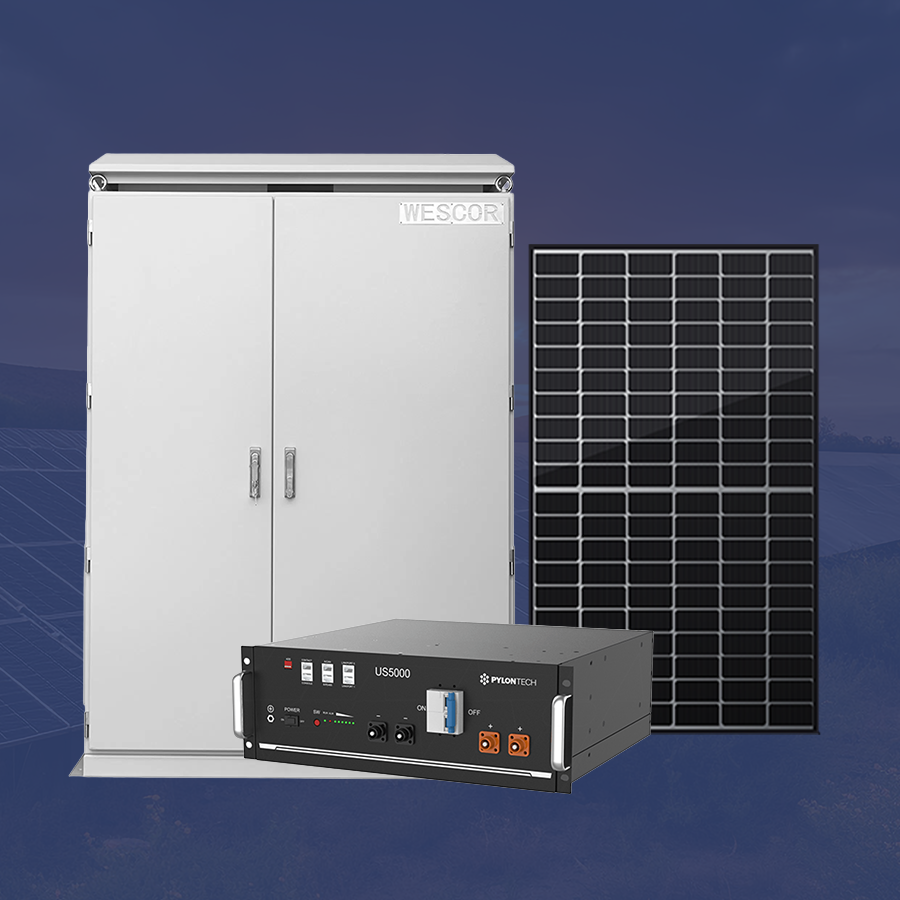
This is a complete offgrid kit which includes:
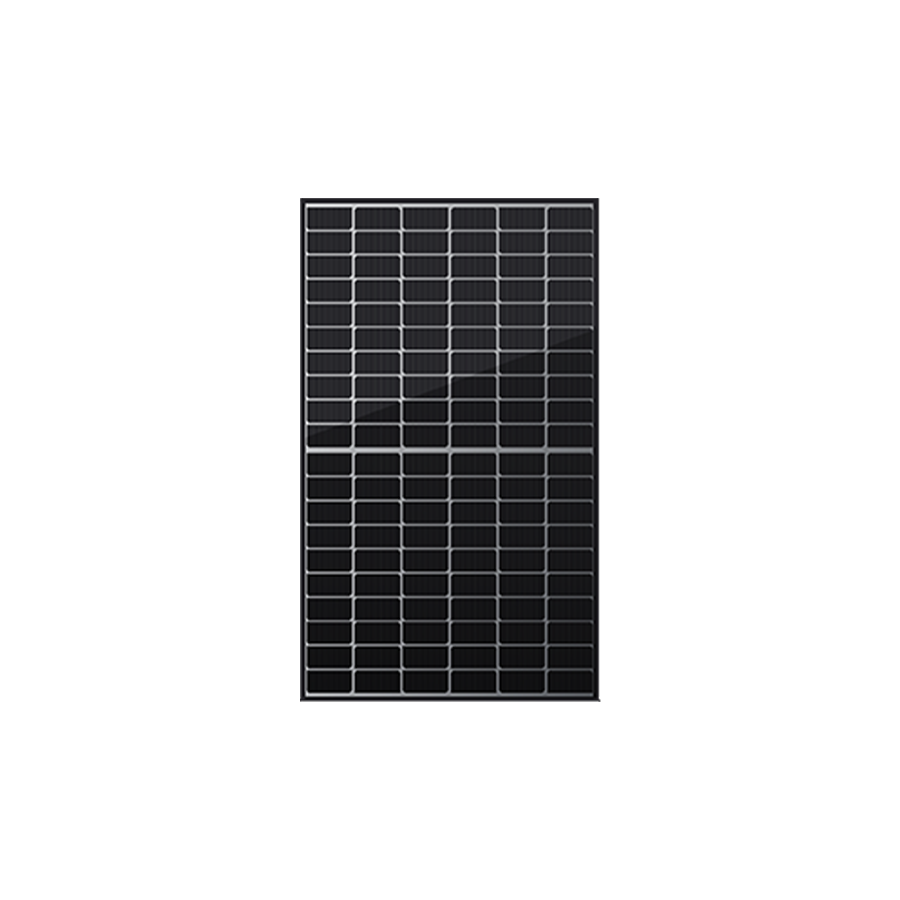
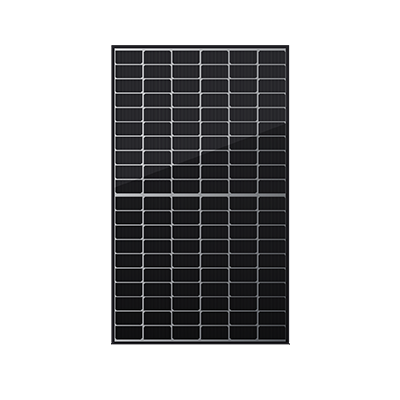
12 x Jinko 470W Solar Panels (5.6kW Total)
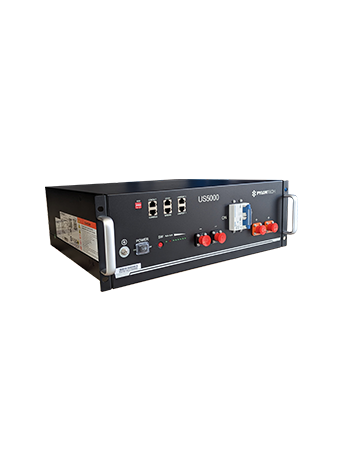
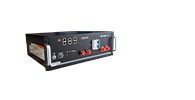
3 x Pylontech 48V 5kWh Batteries (15kWh Total)
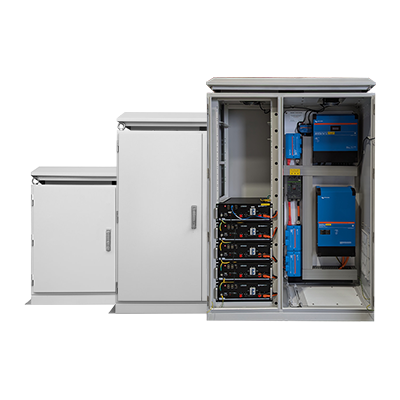
8kVa Prewired Cabinet with:
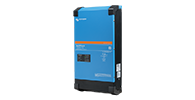
Victron Multiplus II 48V 8kVa Inverter / 110A Charger
Victron MPPT 450/100 Solar Charger
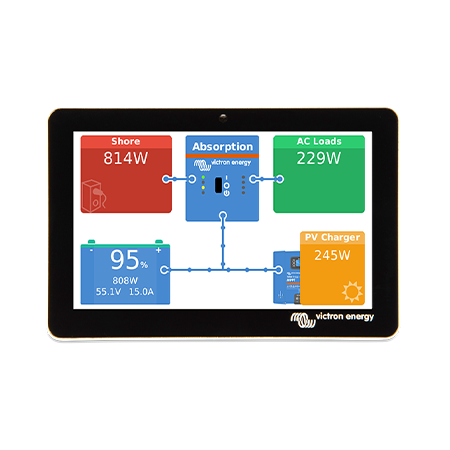
Victron Cerbo + 5" Touch
Battery Isolator / breaker
Solar panel isolator / breaker
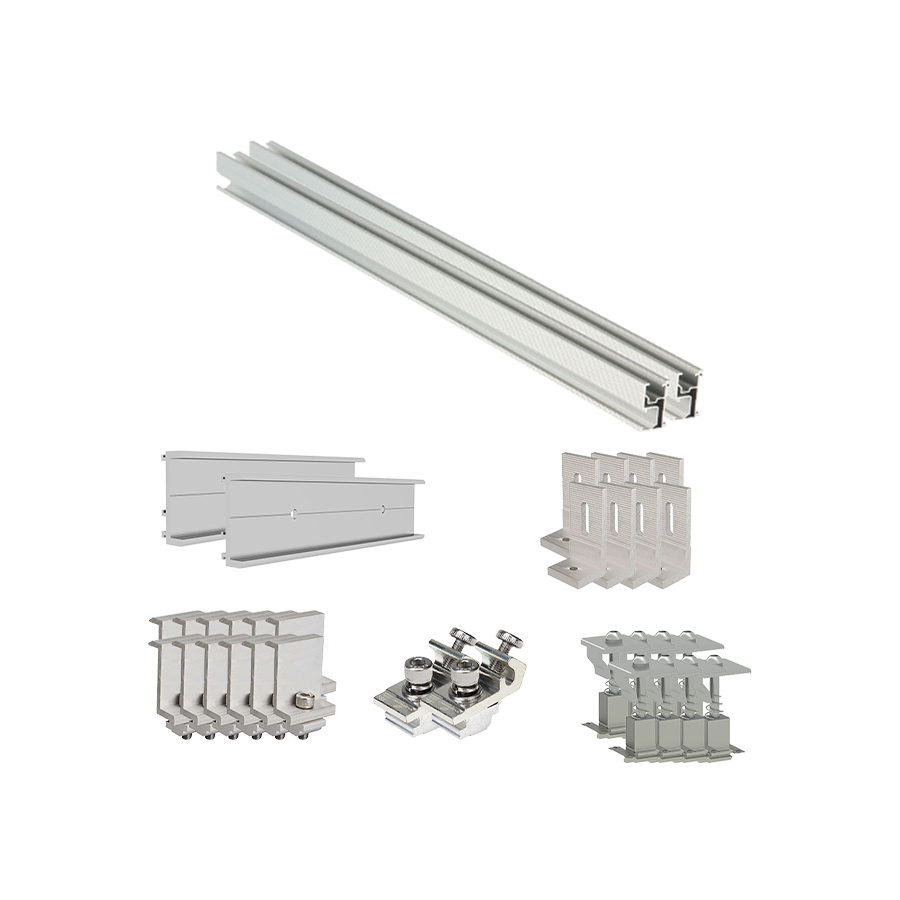
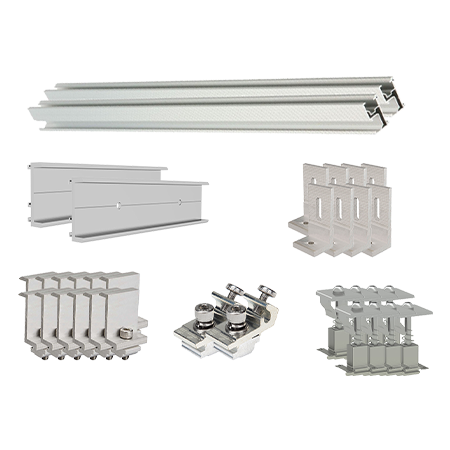
Mounting kit for the solar panels (suit tin roof)
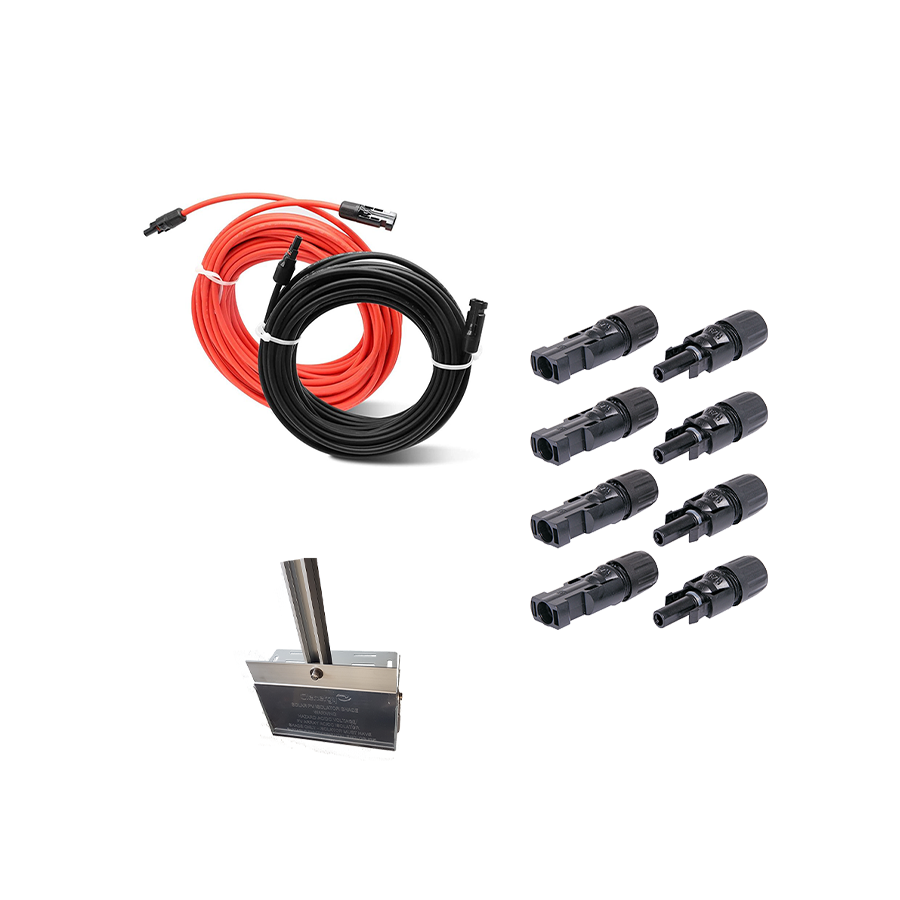
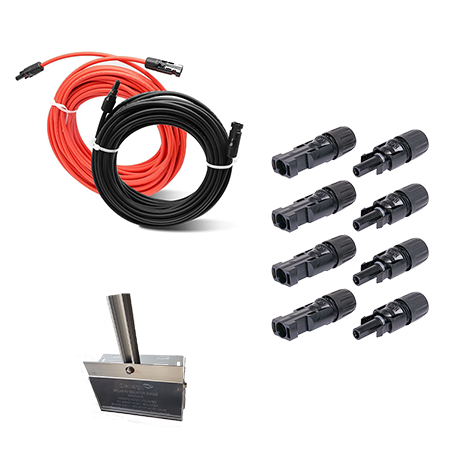
Wiiring kit for the solar panels
This kit contains all components for a complete offgrid system including all cabling, fusing, isolation & solar panel mounting hardware.
This kit does not include:
Tools required to install
Conduit, zip ties, screws & other fastners
230V AC circuit protection & earth stake
cabling to connect a backup generator
Cabinet Dimensions: 1500mm x 585mm x 2038mm
THIS KIT INCLUDES:
Pre-Wired Off Grid Solar Cabinet
This Offgrid Power Cabinet makes Offgrid solar EASY & AFFORDABLE!
It features:
Victron Multiplus II Inverter / Charger
Victron MPPT Solar Controller
Victron Cerbo + Touch 50 Monitoring System
Lynx DC Bus Bar with Mega Fusing
Main Battery Circuit Breaker / Isolator
DC Breakers for Solar String(s)
AC Sub board housing
All Conveniently assembled, wired & programed by our professional technicians onto a 18mm thick sheet of Formply to meet CEC & AS/NZ Standards and make Installation onsite is much quicker and easier.
Simply:
Mount solar panels on the roof and wire into DC breakers on the Board
Connect batteries to the battery circuit breaker
Wire AC output of the inverter to the house/loads
Wire Generator to the AC input of the inverter
Pylontech US5000-B Lithium Battery Modules
US5000-B is the latest and highest capacity version HESS battery system designed by Pylontech. It’s long life characteristics, highest energy and power density in the industry, fashionable design, easiness of installation and expansion, all reflect the real requirements of end users and the strong technical capability of Pylontech.
This compact and modular battery promises more than 6000 cycles with 90% DoD Deliver up to 9.5KW with single module (for 15 seconds) Safest Lithium battery chemistry (Iron Phosphate) Safety Cert.TüV CE UN38.3
Pylontech ensure the highest quality by designing & manufacturing their own Lithium Phosphate (LiFePO4) batteries and BMS boards.
Features:
Cycle life: >6000 cycles @ 25°C with 95% DoD for daily cyclic applications
Usable capacity of 4.56kWh @ 48 vDC
Working Temperature Range -10°C to 55°C, (Charging 0~55°C: Discharging -10~55°C)
Backwards Compatible with existing US series products
Pre-charge function to protect ESS from surge currents
Instantly & easily monitor the battery state of charge, power consumption, power harvest from PV, generator, and mains, or check tank levels and temperature measurements. Easily control the shore/generator power input current limit, (auto)start/stop generator(s) or change any setting to optimise the system. Follow up on alerts, perform diagnostic checks and resolve challenges remotely.
The new Victron GX Touch display allows you to have an instant overview of your system and adjust settings in the blink of an eye. Its super slim 5 inch design, top-mountable setup and its simple installation bring a lot of flexibility when creating a crisp and clean dashboard.
Monitor, manage and optimise your Off-Grid system remotely and catch potential issues early by setting alerts and alarms. With the most up-to-date Remote Monitoring solution on the planet, you are always in perfect control, from anywhere in the world *VRM is free to use but does require an external connection to the internet via wifi or ethernet.
Forbes Batteries can help & support by accessing your system online (with your permission). Accessing the system will allow us to fault find, view data, make changes to settings, update firmware and support with future upgrades.
Jinko 470W Solar Panels
The Jinko Tiger half cell design ensures an improved shading response, resulting in higher yields when the module is partially shaded. Shading loss experienced by half-cell modules is much better than conventional modules in certain shading conditions.
Features:
SMBB Technology
Better light trapping and current collection to improve module power output and reliability.
PID Resistance
Excellent Anti-PID performance guarantee via optimized mass-production process and materials control.
Durability Against Extreme Environmental Conditions
High salt mist and ammonia resistance.
Hot 3.0 Technology
The N-type module with Hot 3.0 technology has better reliability and lower LID/LETID.
Enhanced Mechanical Load
Certified to withstand: wind load (2400 Pascal) and snow load (5400 Pascal).
Clenergy Mounting Kit
Tin roof mounting to suit your solar panels. This kit provides all of the components that you need to ensure that your panels are securely mounted.
Solar Panel Wiring Kit
All of the components that you need to connect you Offgrid Solar kit, including MC4 connectors, cable, and isolators. Expertly compiled by our Off grid team for your safety and convenience!
Q & A
When looking at expanding the system in the future, there are 3 main components that need to be considered: 1 – solar panels, 2 - batteries, 3 - inverter.
1 - Solar Panels: Yes, more solar panels can be added to the system reasonably easily. In some instances, more panels can be added to the existing MPPT solar charger in the kit. In other instances, an additional MPPT solar charger would be required.
2 – Batteries: Yes, more batteries can be added. You can link up to 16 Voltgo or Pylontech batteries together reasonably easily. The only limitation is how many batteries can fit in the cabinets we sell. In saying that, it is possible to add extra batteries in an external cabinet with some modifications.
3 – Inverter: Not easily. We strongly recommend getting an inverter large enough for current and potential future requirements. Although technically you can add a second inverter in parallel (doubling your inverter capacity), there are complications and modifications required. A single inverter results in a much more stable and reliable system.
Yes! These kits contain dangerous AC & DC voltages. These can electrocute you which may result in serious injury or death.
There are some parts of the installation you may be able to perform yourself, such as mounting and positioning the Board/Cabinet & mounting the tin roof railing system.
Yes. Connecting a backup generator will allow you to charge the batteries during times of insufficient solar power. Unfortunately, there will inevitably be prolonged periods of cloudy weather throughout the year which can last many days.
A general rule of thumb is to have a generator that is similar size to the inverter. E.g, 5kVa inverter / 5kVa generator. However, there are exceptions and a smaller generator can still be used.
In addition, these systems can have a generator wired in with change over switch (ask your electrician about doing this). This will allow you to flick a switch and run the property 100% off the generator if the inverter or batteries ever fail. This will ensure you still have an alternative power supply until the issue with the inverter or batteries is resolved.
Yes. Providing your generator has a built in 2-Wire auto start controller.
2-Wire auto start controllers work by bridging 2 wires together to start the generator. Our offgrid kits include the Victron Cerbo which can easily be configured to do this.
The Cerbo can be configured to start the generator on many parameters including low battery state of charge, Low battery voltage, high power consumption at the house and more. The Cerbo can also perform a periodic maintenance run based on a schedule of your choice.
Yes. We can easily change components in these kits to what you need. This includes Number of panels & batteries, different panel mounting hardware such as tile roofs, ground mount systems and adjustable tilt legs for flat roofs. Please contact us for more information.
These kits are required to be installed indoors. An ideal spot would be a garage or shed that is clean and dry. These are not suitable for area’s with excessive dust or area’s with insects or rodents.
These kits include a back to base 5 year warranty for all parts and workmanship. You will be required to arrange for the faulty equipment to be returned to our Toowoomba shop at your expense to process a warranty claim.
These systems can be connected to your internet either via Wifi or ethernet. Once the system is online, we can access the system from our office. This will give us visibility into a huge amount of real time and historic data including error logs component performance.
In some instances we can fix the problem by changing settings remotely. In other instances, we can find out what the problem is which will make it easier to fix.
There are several big issues that we regularly come across with lead acid (Flooded, AGM, Gel, Lead Carbon) batteries that can significantly impact the overall life span of the battery.
Over Discharging
Lead acid batteries can be damaged very easily by over discharging. Some inverters on the market will only shut down when the batteries get below what is considered an acceptable level, for example 9.5V for a 12V system. If there are several days in a row of cloudy weather, and your system shuts down because the batteries are completely flat (9.5V), serious damage will have occurred.
Undercharging
If lead acid batteries are not getting enough charge (there are many reasons such as not enough solar panels, shading / trees have grown since the system was installed, solar panels or other components not working properly after several years, more power is getting used compared to when the system was first installed etc), the batteries will become sulphated and lose their storage capacity. The sulphation process can start occurring within 48hours of batteries not getting fully charged.
(Note. this is also one reason why a good monitoring system is so important).
One battery in the set fails
It is not uncommon for 1 battery in the set of lead acids to "drop a cell". This will cause the system to effectively lose 2 volts, resulting in the system shutting down early. If you are not regularly testing your batteries, you may not notice 2 volts missing at first. This will result in the other batteries in the set potentially getting charged at too high a voltage.
(For example, on a 12v system, if there is 2 volts missing from the bank, the solar chargers will still charge the entire bank up to the programmed voltage (usually around 14.4V), however the remaining 5 cells in the bank will have to "pick up the slack" and receive the extra 2 volts distributed across them. So, 2 volts / 5 cells = 0.4v extra per cell. This will quickly over charge and destroy the remaining cells).
Mixing and matching different batteries
If you have 2 batteries in a set that are different (different brands, chemistries, capacities, age), they will also have a different internal resistance. Electrical current will always take the "path of least resistance". This will result in some batteries doing more work / taking more charge, and other batteries doing less work / taking less charge. In some instances, some batteries in the set can be receiving a much higher charge voltage (we've seen by as much as 1 - 2 volts). This will quickly cause issues and damage batteries in the set.
3rd party battery monitors not giving accurate information
There are lots of good battery monitors on the market that can calculate the batteries State of Charge (S.O.C) as a percent. This will tell you how much charge you have left in your battery (eg 68%). When they are working, they are brilliant. However, there are several things that can go wrong with these, and if you are get a false reading like the monitor saying 100% when the batteries are in reality flat, it can lead you to think everything is ok until things start failing.
These monitors rely on several factors to do an internal calculation and work out what they think is the batteries state of charge. (They do not look at the batteries voltage to work out S.O.C, they effectively count amps via a shunt to work out S.O.C). The problem is batteries are not 100% efficient, so if it counts 1 amp hour going out, it needs to see more than 1 amp hour going back in to get back up to 100%. It is up to the battery monitor to calculate how much more. So, in order for these devices to stay accurate, they also look at other factors such as voltage, when the current is below a certain level for a certain time to allow them to "re sync" to 100%. The main problem is if there is lots of overcast weather and the batteries are not getting enough charge, the monitors can "re sync" and will quickly be inaccurate.
Batteries not staying equally charged.
Overtime each battery/cell in your set will become slightly different in S.O.C. This is due to tiny differences in the resistances in the batteries and cabling. In order to correct this, better quality solar chargers will have a built in equalise feature that slightly overcharges the batteries every 2 - 4 weeks to ensure they all remain level. The further you drain the batteries each might, the further the batteries become imbalanced. This makes it harder and harder for the solar charge to perform this equalise feature.
All of the above issues we regularly come across with lead acid batteries, are not a problem for most good quality lithium batteries. The BMS in the battery will not allow you to under or over recharge the battery. If you drain a lithium battery very low, there is no harm done and it will easily recharge back up with no damage done. If one battery in the set fails, managed lithium batteries such as Pylontech batteries will isolate that one module and keep operating on the remaining modules without any dramas. If you need to add extra batteries at a later date, there is no internal resistance issues when mixing and matching as the BMS ensures each battery is still getting the correct voltage. The Pylontech batteries each have their own internal battery monitor built in that is way more reliable that any 3rd party battery monitors for lead acid batteries. The Pylontech batteries have internal cell balances installed in each module, and the CANBUS interface ensures each module stays adequately equalised.
Unfortunately not. Victron do not make a wind turbine or controller and other brands will not integrate with this system.
Yes. We can provide (at additional cost) an extender that will allow the touch screen to be installed in a separate room to the off grid power system via a standard Cat6 network cable.
Alternatively an android device can be converted into a seconday display that can be located in a different location (over the existing WiFi network)
Yes. These off grid kits can be configured in different modes to accommodate a property that is connected to the grid.
Standard Off grid Mode: In this mode the property of part of the property can be run by the off grid power system. The grid can be used as the backup power supply (similar to a backup generator). This system can be configured so that the grid “kicks in” to charge the batteries automatically if the batteries start to get low.
ESS (Energy Storage System) Mode: In this mode the system intelligently manages the available power to minimise grid consumption and feed surplus solar back to the grid. The system will always prioritise the use of solar first, battery second and grid third. Surplus solar will be used to charge the batteries first then sent back to the grid second. (Please note, there are several restrictions by energy providers and regulators that may not allow this system to be installed in your area).
Yes all the cabinets in these kits have internal fan cooling. These fans are temperature controlled and can be adjusted to suit your requirements. Note: We also can customise these kits with fully airconditioned cabinets.
No. Recent changed to regulations no longer require roof top isolators. Rooftop isolators used to be required however, due to their high failure rate and risk of fire they are no longer required by Australian Standards (or recommended by us).
Optimally facing your panels North at approx. 30 – 45Deg will give you the best yield especially during winter when solar production is at it’s lowest. However, due to roof shapes and orientations it is not always possible to do this. Our kits with the 450/100A MPPTs feature 2 separate MPPT trackers, this allows you to install 2 completely separate strings of solar panels (usually 4 – 7 panels each string). All panels in the string need to face the same direction and be the exact same model of panel. However, you can have 1 string facing 1 direction, and a second string (with different model panels) facing a different direction/angle). Our kits with 450/200A MPPTs feature 4 strings hence potentially different orientations.
Yes. We recommend using the Victron EV Charger. This charger will seamlessly intergrate with these kits. It will allow the EV charger to be visible on the touch screen and all backend monitoring. This will allow you to configure the charger in different modes including a feature to only use surplus solar power to charge the EV battery (as opposed to using grid power to charge the EV battery).
We will sometimes have these kits in stock ready to pick up same day. However sometimes we may have to manufacture the cabinet or board for you. Generally there is an approximate 2 week lead time. Please contact us for more info.
No. All this equipment will need to be provided by the installer and connected to the output terminals on the inverter.

 Automotive & Recreation Batteries
  Charging & Power Conversion
  Device & Everyday Batteries
  Bluetti
  Accessories & Installation
  Offgrid Systems
  Power & Conversion
  Batteries & Accessories
  Accessories & Installation
  Accessories & Installation
  Charging & Power
  Systems & Packages
  Batteries
  Bluetti
  Starlink
  Dual Battery Systems & Packages
  Batteries
  UHF
UHF  Bluetti
  Lighting
  Brake Controllers
  Accessories & Installation
  Charging & Power
  Coverage & Handsfree
  Starlink